Содержание
The English High Court has handed down a decision affecting the rights of grain traders to recover unpaid contractual prices, overturning three GAFTA awards worth over USD 22 million. The case of Trans Trade RK SA v State Food and Grain Corporation of Ukraine [2025] EWHC 1803 (Comm) (17 July 2025) highlights the critical distinction between a seller’s right to claim the full price of the goods and the right to claim damages only.
Background: What happened to the Ukrainian grain
In July 2025, Mr Justice Andrew Baker set aside three appeal awards issued by the GAFTA Board of Appeal in favour of the Ukrainian state grain corporation.
The dispute concerned three contracts for Ukrainian feed corn sold FOB Chornomorsk, with a total outstanding amount exceeding USD 22 million.
All contracts included the following terms:
- Delivery on GAFTA 49 terms;
- Payment “cash against documents” (though not the classic form, but rather against presentation of scanned copies);
- A retention of title clause, reserving ownership of the goods until full payment was made.
The grain was loaded onto four separate vessels (Islander S, AK Denisa, Gozo, and Eider S) between May and August 2021. Following loading, the parties amended the payment terms, agreeing on a final deadline of 1 September 2021, in any case “before breaking bulk”.
After loading, the Seller provided the Buyer with scanned copies of the documents required for payment. The Buyer paid for certain shipments but refused to pay for the cargoes on board Islander S and Eider S, initially alleging that the contracts had been frustrated.
The total amount unpaid was USD 22.76 million.
The Seller’s strategy: Claiming the price instead of damages
In this case, the original bills of lading and other documents remained in the Seller’s possession. Ordinarily, when a buyer under an FOB contract refuses to pay for the goods while they are still in transit, the usual course of action is as follows: the seller declares the buyer in default, charters a vessel to recover the goods, seeks a substitute buyer, and then claims damages in arbitration (covering freight, detention, price difference, etc.). Generally, the buyer cannot be “forced” to pay for the goods unless they have received the original bills of lading (i.e., documents of title) or have wrongfully taken possession of the goods in breach of the contract (for example, by discharging against a letter of indemnity, depriving the FOB seller of the opportunity to resell the cargo).
The Court observed that the GAFTA awards did not make clear what had actually happened to the cargo. The Seller alleged that the Buyer discharged the cargo without original bills of lading, but the tribunal found that this had not been proven. The Seller also did not plead wrongful interference with the goods as a separate cause of action.
The Seller relied on section 49(2) of the Sale of Goods Act 1979 (remedies of the seller), which provides:
(2 ) Where, under a contract of sale, the price is payable on a day certain irrespective of delivery and the buyer wrongfully neglects or refuses to pay such price, the seller may maintain an action for the price, although the property in the goods has not passed and the goods have not been appropriated to the contract.
This provision allows the seller to claim the price if it is (1) “payable on a day certain” and (2) “irrespective of delivery”, even if title has not passed.
The Seller argued that he was entitled to claim the price under section 49(2) because:
- The amended payment terms set a specific date — 1 September 2021 (“day certain”);
- The payment date was agreed after delivery of the goods, so payment was not conditional upon delivery (“irrespective of delivery”).
Initially, in the GAFTA arbitration, the Buyer had argued that the contracts had been frustrated and that the Seller had failed to mitigate his losses. In response, the Seller asserted that the claim was not one for damages. Later, the Buyer changed tack, and the key arguments were:
- Section 49(2) did not apply to the case (primary argument);
- Even if it did, the amended payment clause did not meet the statutory requirements of section 49(2).
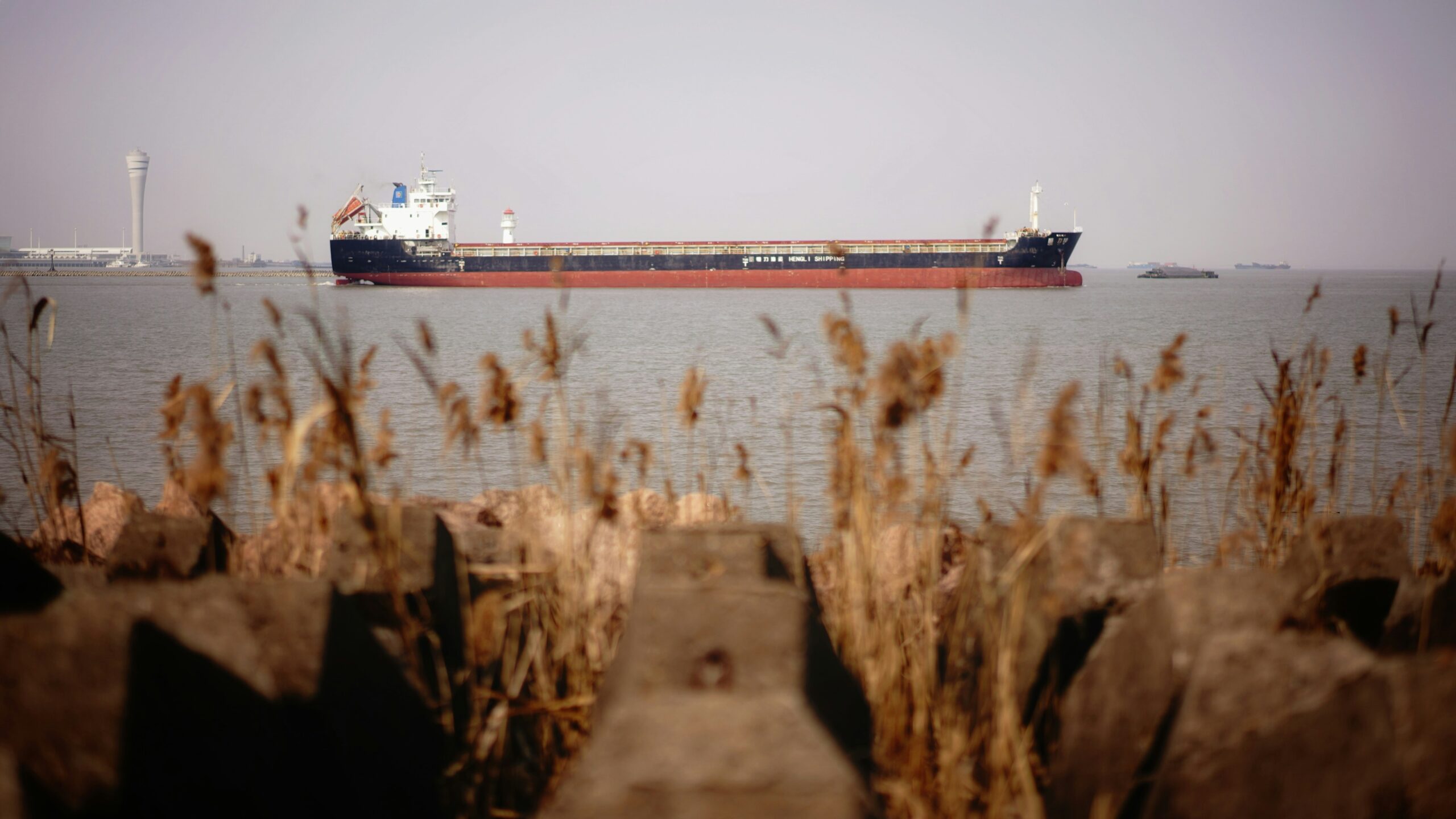
![GAFTA: When a Seller under FOB Cannot Claim the Price — Trans Trade RK SA v State Food and Grain Corporation of Ukraine [2025] EWHC 1803 (Comm), фото 1](https://danil-hristich.com/wp-content/uploads/2025/07/bryan-brittos-pZaZd198r1g-unsplash-1024x701-optimized.jpg "GAFTA: When a Seller under FOB Cannot Claim the Price — Trans Trade RK SA v State Food and Grain Corporation of Ukraine [2025] EWHC 1803 (Comm), фото 1")
The GAFTA Awards
The GAFTA first-tier tribunal rendered awards in favour of the Seller under all three contracts. The GAFTA Board of Appeal upheld those decisions.
The Board’s entire analysis of the applicability of section 49(2) was reduced to two simple points: the Buyer admitted non-payment, and title had not passed. From this, the arbitrators concluded that the Seller had a legal right to claim the price of the goods. They quoted the text of section 49(2) and stated:
As such, an action for the price can be advanced by the Sellers as Buyers have (a) not paid, as admitted, and (b) property has not passed.
The Buyer appealed all three GAFTA decisions to the High Court.
Why the High Court Set Aside the GAFTA Awards
Mr Justice Andrew Baker fundamentally disagreed with the conclusions of the GAFTA tribunals and set aside all three awards.
The central issue was the misinterpretation of the phrase “irrespective of delivery” in section 49(2). The Judge explained that this phrase means the Buyer’s obligation to pay must not depend on the Seller’s performance of the delivery obligation. For example, a clause stating: “payment on the first of each month irrespective of shipments”. In this case, although a fixed payment date had been agreed, the contract still required “cash against documents”, which inherently linked payment to delivery. In other words, despite the 1 September deadline, the Seller still had to present shipping documents to be entitled to payment.
The Judge stated:
The contract provided for the price to be payable ‘cash against documents’ and, on a true analysis, the documentary delivery that would oblige the buyer to pay the price was (the completion of) the seller’s delivery obligation in respect of the goods.
The Seller tried to persuade the Court that, since the payment date was agreed after shipment, the obligation to pay had become independent of delivery. However, the Judge firmly rejected this, stating:
The price was still a price payable in respect of, and on condition of, the performance by the seller of its obligation to deliver, ‘cash against documents’. If the condition was satisfied, in fact, when the price clause was agreed, that does not affect the conditional nature of the price obligation created.
In analysing the arbitrators’ error, the Court held that they had made a conceptual mistake by focusing on formal factors (fixed payment date, title not passed, admitted non-payment), while failing to interpret section 49(2) correctly and ignoring the key question: whether the obligation to pay was truly independent of delivery.
Conclusion
The Court confirmed that in FOB contracts with CAD (cash against documents) terms, a claim for the price under section 49(2) of the Sale of Goods Act 1979 is not applicable. Such payment is not “irrespective of delivery”, as it remains conditional — dependent on presentation of documents. As a result, the Seller had chosen the wrong remedy: he could not claim the price, but should have claimed damages or, if supported by evidence, wrongful interference with the goods. Neither was pursued in the GAFTA arbitration, and new arguments could not be introduced at the appeal stage. Consequently, the Court set aside all three GAFTA awards totalling over USD 22 million.
If you are working with FOB or CIF contracts and need to choose the appropriate remedy — whether to claim the price, seek damages, or bring a claim for wrongful interference — feel free to contact me by email, Telegram, or WhatsApp for a consultation. I will assess the risks in advance to help you avoid mistakes that may result in the annulment of an arbitration award.