Содержание
In June 2025, the Commercial Court in London (High Court of Justice) handed down an important judgment concerning a challenge to a decision of the GAFTA Board of Appeal. CAFI – Commodity & Freight Integrators DMCC v GTCS Trading DMCC [2025] EWHC 1350 (Comm), demonstrates how arbitrators may exceed their jurisdiction and establishes an important precedent on overlapping arbitration agreements. The case offers a number of practical lessons for market participants.
Factual background: two contracts for the same cargo
The story began in March 2022 with a typical sale of Russian wheat. GTCS (the Sellers) and CAFI (the Buyers) entered into a first contract dated 11 March for the sale of 28,000 MT of Russian milling wheat at a price of USD 465/MT on C&F terms to an Egyptian port. The contract contained a standard GAFTA arbitration clause.
The cargo was loaded aboard the vessel NANA LEEN on 14 March at Novorossiysk. While the vessel was en route to Egypt, CAFI informed GTCS that it could not pay for the cargo due to US sanctions on Russia. GTCS rejected this explanation and on 23 March declared the contract terminated, accusing CAFI of anticipatory breach.
Following broker intervention, the parties agreed a second contract on 25 March at a reduced price of USD 440/MT. A key feature of this agreement was a Termination Clause stating:
“Both parties have agreed that Contract No. RMW125
11032022-1 dd. 11.03.2022 [i.e. the First Contract] … is
terminated and considered void.
The second contract was performed without issue—CAFI paid, and the cargo was discharged in Egypt in April 2022.
GAFTA arbitration: two tiers, two decisions
One might have thought the matter resolved, but GTCS commenced GAFTA arbitration, seeking damages for breach of the first contract.
The GAFTA first-tier tribunal rejected the claim in March 2023, holding that by entering into the second contract with the Termination Clause, GTCS had waived its right to claim damages under the first contract.
However, the GAFTA Board of Appeal, comprising five arbitrators, reversed the award and ordered CAFI to pay damages of USD 700,000 plus interest and costs. Their reasoning was as follows:
- Since the claim was brought under the first contract, the tribunal lacked jurisdiction to interpret the second contract or assess its impact on the first;
- The second contract could only be used as “evidence” of what had occurred;
- The second contract was insufficient to establish a waiver of rights by GTCS;
- Therefore, CAFI remained liable in damages under the first contract.
Three grounds of challenge before the English court
The English Arbitration Act 1996 provides three distinct grounds for challenging arbitral awards:
- lack or excess of jurisdiction (section 67);
- serious irregularity (section 68);
- appeal on point of law (section 69).
CAFI pursued all three — a rare “combo” approach, as most challenges tend to focus on a single ground. Here, however, CAFI contended that the GAFTA Appeal Board’s conduct engaged all three provisions.
Ground 1: Jurisdictional error
CAFI argued that the Appeal Board erred in concluding that it lacked jurisdiction to interpret the second contract and its effect on the first.
CAFI’s case: The arbitration clause in the first contract (“any dispute arising out of or in connection with this contract”) was wide enough to encompass the issue of whether the parties had subsequently waived their rights to damages.
GTCS’s response: The second contract contained its own GAFTA arbitration clause, and therefore any interpretation of its terms required a separate arbitration.
Ground 2: Excess of jurisdiction, serious procedural irregularity, and error of law
CAFI constructed a layered argument:
- If, as the Appeal Board stated, it had no jurisdiction to interpret the second contract, then it had no power to award damages under the first. Determining liability without considering the effect of the Termination Clause was a jurisdictional overreach (s. 67);
- The arbitrators effectively decided the waiver issue while claiming they had no power to do so — breaching the duty of fair hearing (s. 68);
- Finally, awarding damages without considering whether the Termination Clause extinguished the claim, in CAFI’s view, contravened core principles of English contract law and amounted to a clear legal error (s. 69).
GTCS’s counterargument: The Sellers contended that the arbitrators were entitled to consider the second contract as “evidence” of the parties’ conduct without interpreting it as a legal instrument. That, they said, was sufficient to reach a decision under the first contract.
Ground 3: Error of law
In the alternative, if it was found that the Board did in fact interpret the second contract, CAFI added a fallback argument: it applied the wrong principles of interpretation.
CAFI’s position: The Appeal Board had required proof that the Termination Clause in the second contract was “freely negotiated” or the subject of “clear discussion,” and on that basis held that “void” merely repeated “terminated.” This approach, CAFI said, was contrary to English law: where a contract is in writing, the starting point is the text — not the negotiation history.
GTCS’s response: Even if the Board did interpret the clause, its conclusion was commercially reasonable: in context, “void” could be viewed as a repetition of “terminated” and did not preclude the Sellers’ right to bring a claim.
In summary, CAFI advanced three distinct but interwoven lines of attack: pure jurisdiction (s. 67); a combined challenge on procedure, jurisdiction and law (Challenge 2); and a fallback s. 69 challenge in case the second contract had indeed been interpreted.
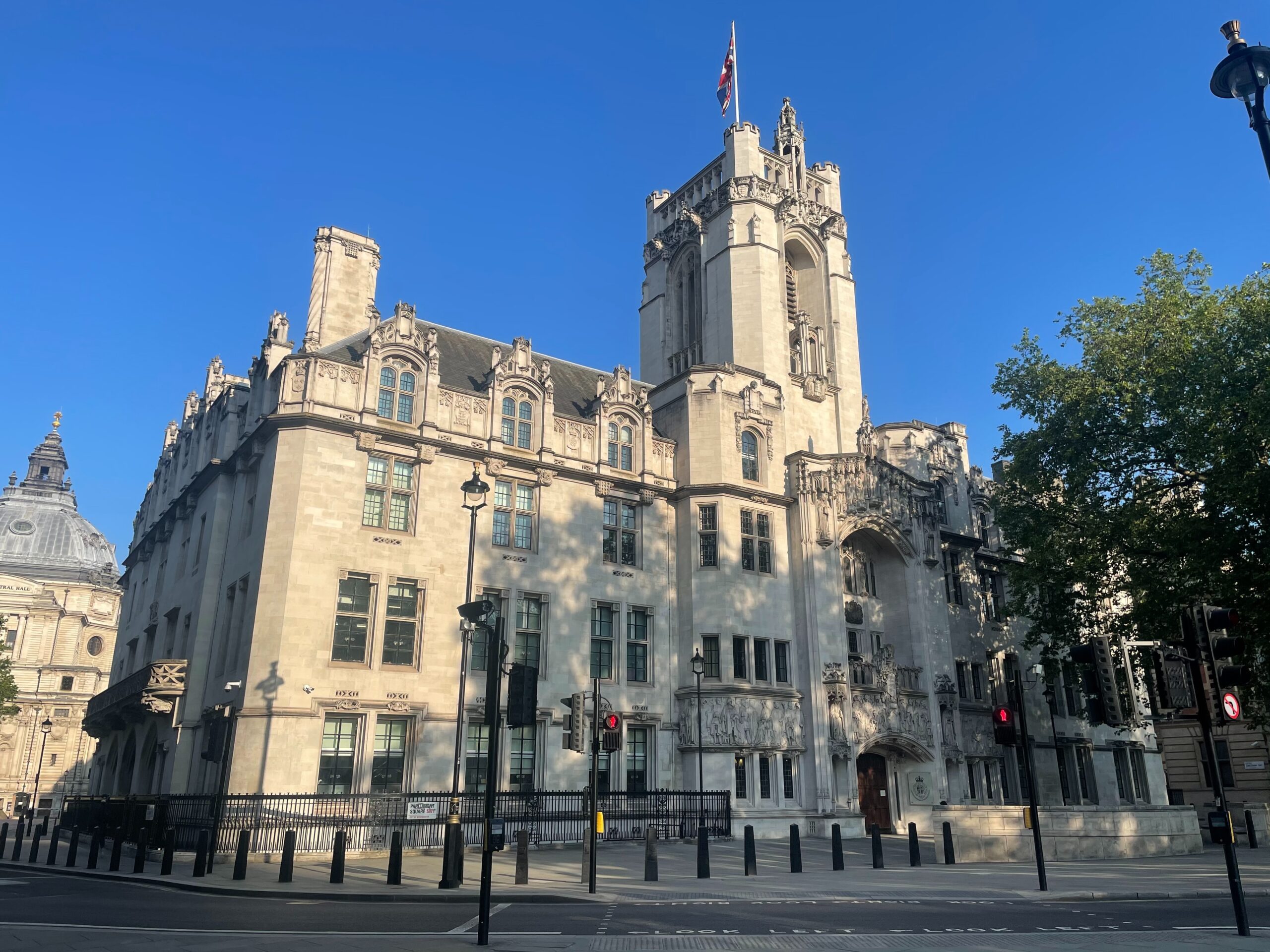
![Challenging GAFTA Jurisdiction in the English Courts: CAFI v GTCS Trading DMCC [2025] EWHC 1350 (Comm), фото 1](https://danil-hristich.com/wp-content/uploads/2025/07/nick-berger-D3kraYfGue0-unsplash-1024x683-optimized.jpg "Challenging GAFTA Jurisdiction in the English Courts: CAFI v GTCS Trading DMCC [2025] EWHC 1350 (Comm), фото 1")
The Court’s Decision
Mr Justice Henshaw allowed the appeal on both the first ground (jurisdiction) and the second ground (excess of powers, serious procedural irregularity, and error of law), and accordingly set aside the relevant parts of the GAFTA Board of Appeal’s award.
First, the Court held that the dispute as to whether the Termination Clause in the second contract extinguished the Sellers’ right to claim damages under the first contract fell within the scope of the arbitration clause in the first contract, even if it also came within the clause in the second. The judge noted that reasonable commercial parties would not expect interconnected disputes to be fragmented between two tribunals: the cargo was the same, the parties were the same, and initiating a separate arbitration simply to interpret the Termination Clause would be unjustified.
Second, the GAFTA Appeal Board exceeded its powers: having declared that it lacked jurisdiction to interpret the second contract, it nonetheless awarded damages—thereby resolving the very issue of whether the Termination Clause barred the claim under the first contract.
This constituted a serious procedural irregularity under section 68: the tribunal determined an issue which, by its own admission, should have been resolved elsewhere, thereby breaching the duty to act fairly. It also amounted to an error of law within the second ground (section 69).
The Court did not rule on Ground 3, as the arbitrators had explicitly stated that they had not interpreted the second contract. However, in obiter dictum, the Court added that had the tribunal’s reasoning been based on the need to show “free negotiation” or “clear discussion” outside the contract text, this too would have amounted to a clear error of law.
This, the GAFTA Board of Appeal’s decision was set aside; the issues of waiver and quantum were remitted for reconsideration.
Conclusion
CAFI v GTCS is an exceptional case—believed to be the first in English legal history—in which an arbitral award has been set aside on all three possible grounds under the Arbitration Act 1996 (ss. 67, 68, and 69).
The judgment serves as a reminder to GAFTA arbitrators: the broadly worded phrase “arising out of or under” captures subsequent agreements that affect the original contract. Attempting to “split” a single dispute between two arbitration clauses creates procedural deadlock and invites court intervention.
The case illustrates that even experienced arbitrators can misjudge the limits of their mandate. Participants in the grain trade must be aware of these boundaries and should not hesitate to challenge them before the English courts when fairness requires a comprehensive approach.
If you are working with GAFTA contracts and face questions of arbitral jurisdiction, want to assess the risks of challenging an award, or seek to safeguard yourself against procedural missteps, feel free to contact me by email, Telegram, or WhatsApp for a consultation.