Содержание
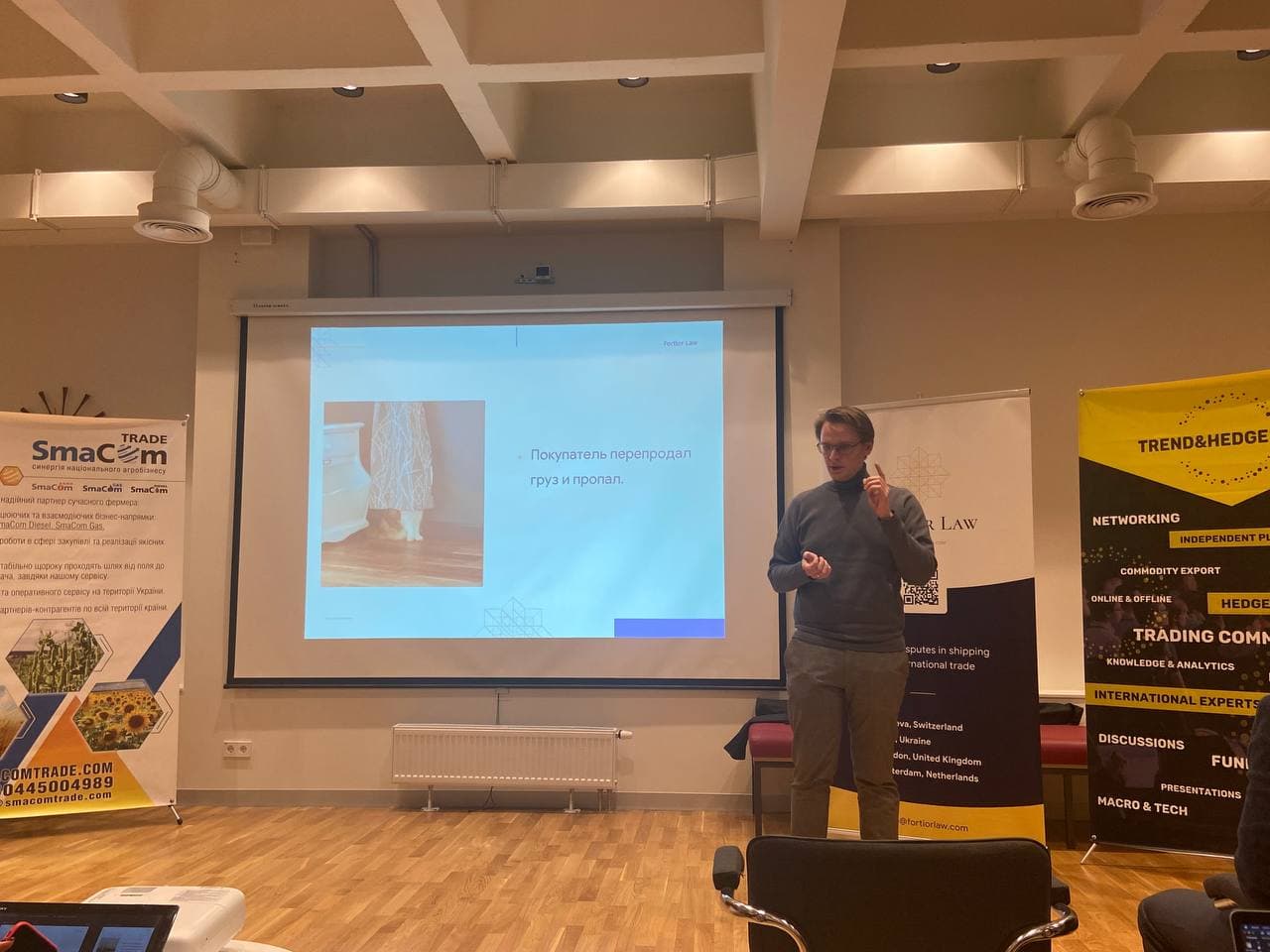
Based on my speech at the Trend & Hedge Club in Kyiv.
Over the last few years, the Ukrainian media have been abuzz with scandals about default of traders. Those traders were seen as solid market players with excellent prospects for the future.
In 2019 it was Agroinvest and Cardiff. In 2020 it was Spike Trade. Now it is time for Mimier. The stories are different, but they all follow the same script:
- Stage 1: Rumours emerge that the company has stopped paying.
- Stage 2: The debtor tries to “restructure” the debt (whatever that means).
- Stage 3: News appears in the media that the trader is about to become bankrupt. At this point, the debtor is usually no longer in touch.
After Stage 3, a creditors’ committee is formed where all those affected have an opportunity to find out who else is in the same boat. Then, the calculation of the total losses begins. Afterwards, creditors discuss: “Is there any point in going to arbitration? The money is no longer there anyway”. Indeed, when someone is about to take action, there is nothing left to collect.
Why does this happen?
Trust. Delays in payment or delivery are routine problems in grain trading. Traders do not start a war when there is a 1-2 day delay. Moreover, when a trader trades with someone he has known for a long time, it seems logical to wait.
The illusion that the legal process is expensive and inefficient. There is a belief that Gafta and FOSFA are lengthy and costly. And in addition, at the end of the day creditors only get a piece of paper in which the arbitrators confirm their case.
Misunderstanding of all options. Some creditors often believe arbitration is the only option for legal action (as ineffective as possible). Sometimes this view emerges from previous negative experiences.

What can be done in these situations?
First, react quickly. Preferably no later than Stage 2.
Secondly, reserve your right to recover your losses in arbitration, i.e. file a notification of arbitration. This way you do not miss the limitation period (which happens often). This is free in Gafta and FOSFA. You pay a deposit only upon filing a claim (if it comes to that).
Thirdly, and most importantly, seize the debtor’s property (obtain provisional measures – injunctions).
The pros of the injunctions are as follows:
- they can be obtained before going to arbitration;
- it takes 1-2 days to get an injunction;
- applications are usually dealt with without notice to the other party;
- low cost (e.g. about US$3,000 for arrest of a vessel in Malta).
Here my colleague and I gave a detailed example of how we arrested cargo in the Netherlands and a vessel in Malta. In that situation, we did not collect the debt from the debtor but from the final consignee. The same procedure can be used to arrest a bank account.
Injunction procedure vary from country to country: somewhere it’s easier, cheaper or quicker. I will highlight the Worldwide Freezing Order (“WFO”), available in the High Court of Justice.
WFO
Under a WFO, the court prohibits the debtor from doing anything with their assets for the claim amount. An asset disclosure order is usually obtained simultaneously with a WFO. If the debtor violates or ignores the order, a company’s directors (and sometimes beneficiaries) can be liable for contempt of court. The maximum penalty is 2 years imprisonment and a fine. One of the main requirements is to show the risk of dissipation of assets.
Suppose the enforcement process reveals that the debtor has withdrawn funds. In that case, you can try to get a WFO against those who facilitated the withdrawal and ask for the withdrawal transactions to be cancelled. You can read about a similar case here (access to Westlaw is necessary).
What else is there to think about?
In summary, Injunctions are not a panacea. They are obtained in support of a claim, so you still have to go to arbitration.
An injunction is just one tactical move that must fit into an overall collection strategy. Sometimes it is better to wait until a vessel arrives in a right place, where it is easy to get an arrest.
Sometimes an arrest is needed to make the final consignee pay rather than the debtor (who may no longer have the money).
In rare cases, an arrest is needed to lead a debtor to give false explanations, which may then be used to cancel previous transactions.