Содержание
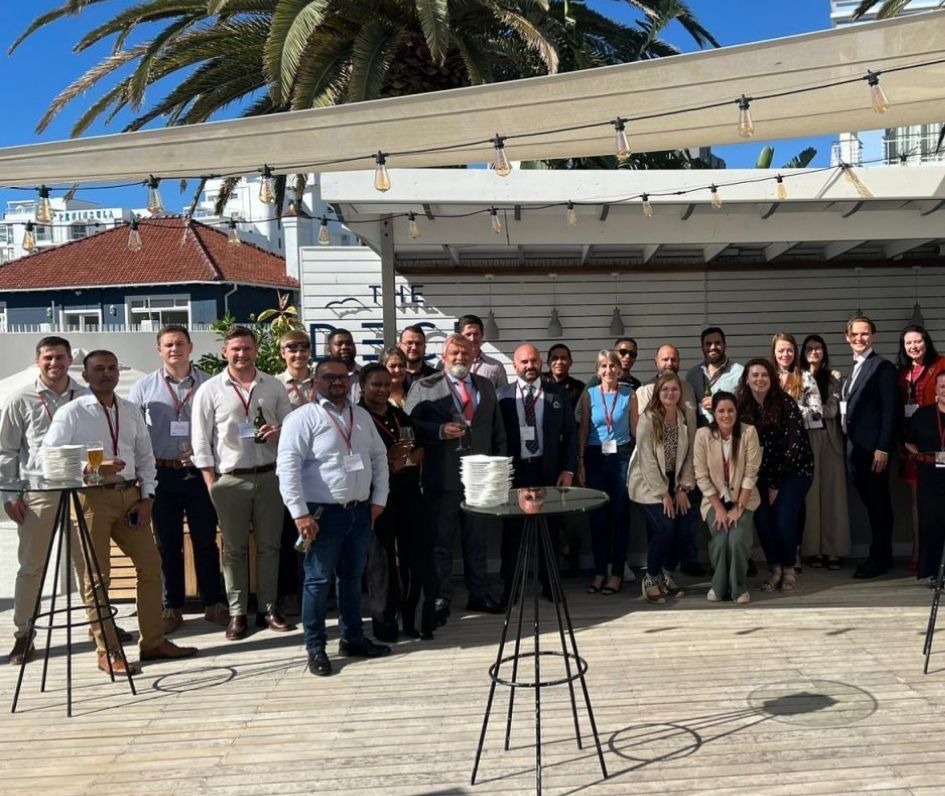
In November, I spoke at a training course on commodity contracts in Cape Town, organised by Gafta. This course is part of the Gafta Professional Development (GPD) programme. For many professionals, successfully completing the course is an important step in their careers, especially if they aim to obtain the Gafta Trade Diploma and become Gafta arbitrators.
This was the first Gafta training course held in South Africa. The seminar brought together traders, lawyers, and other professionals to discuss the most pressing issues in international trade and arbitration.
The course lasted two days and was extremely intensive. We covered a wide range of topics, such as contract formation, FOB and CIF terms, main payment methods, letters of credit, insurance, Gafta arbitration, and much more. I was delighted to share my knowledge with the participants, illustrating the material with examples from my ten years of practice.
At the end of the course, participants took an exam and received certificates of completion from Gafta. It was rewarding to see the lively interest and active engagement of everyone present.
During the course, I was asked numerous interesting questions. Here are a few that, in my opinion, deserve special attention.

Timeframes for Delivery to the Port of Discharge in FOB and CIF Contracts
Q: When discussing FOB and CIF contracts, the focus is mainly on the port of loading: the importance of presenting a vessel for FOB within the delivery period and ensuring the bill of lading dates correspond to the shipment period in CIF. What about the port of discharge? Are there any terms in contracts regarding the timeframe for delivering goods to the port of discharge? What should be done if the goods arrive later than expected?
A: Contracts typically do not specify timeframes for delivering goods to the port of discharge. For a FOB Seller, it is straightforward: the seller does not charter the vessel, and their obligations end at the quay. The seller may not even know when or if the goods were delivered to the port of discharge.
In CIF, the seller usually arranges freight, but terms concerning delivery timelines to the port of discharge are still very rare. Nonetheless, the seller must not prevent the delivery, and charterparties include implied terms: to proceed with reasonable despatch and not to deviate from the route.
Thus, if the vessel was expected to arrive by the 10th but arrived on the 30th, the buyer has two options:
- If the delay is the seller’s fault, claim damages under the contract and claim damages in Gafta.
- If the carrier is at fault, file a claim against them under the bill of lading. Bills of lading often incorporate charterparty terms (e.g., the reverse side of Congenbill 94), including arbitration clauses. Therefore, the buyer can initiate arbitration based on the charterparty terms.
The Importance of Pre-Advice in FOB Contracts
Q: We discussed the buyer’s obligation to provide pre-advice in FOB contracts. Why is this important for the seller?
A: Pre-advice allows the seller to prepare for fulfilling their obligations. The delivery period may be long (e.g., a month), and the seller’s duty to deliver under Gafta contracts arises only after the vessel is nominated at the port of loading. Pre-advice gives the seller clarity on when these obligations will begin. Based on this, the seller can:
- Arrange logistics to ensure the goods are procured and delivered to or near the port.
- Prepare the terminal to receive the cargo and secure a free berth for loading, avoiding demurrage.
- Ensure the shipping agent has submitted all necessary applications to the port authority and placed the vessel in the lineup.
In this way, pre-advice helps prevent disruptions in delivery and additional costs.
Comparing Market and Contract Prices to Assess Damages
Q: If the innocent party chooses to calculate damages based on the market and contract prices, are they required to demonstrate that the goods were bought or sold at the market price?
A: o, demonstrating an actual resale or repurchase is not required. In fact, they are not mandatory at all. Gafta proformas allow for damages even without real transactions. This can sometimes be more advantageous for the party, as it avoids additional costs for logistics, freight, etc.
Gafta Training
If you want to enhance your team’s knowledge of Gafta and FOSFA contracts, I can conduct tailored training designed to suit your company’s specific needs. The programme may include the analysis of complex cases, practical exercises, and answers to questions relevant to your business. Training can be conducted in person or online, depending on your team’s preferences.
Contact me via email, Telegram, or WhatsApp to discuss the details and format of the training. I would be happy to help your company strengthen its competencies in international trade and arbitration.